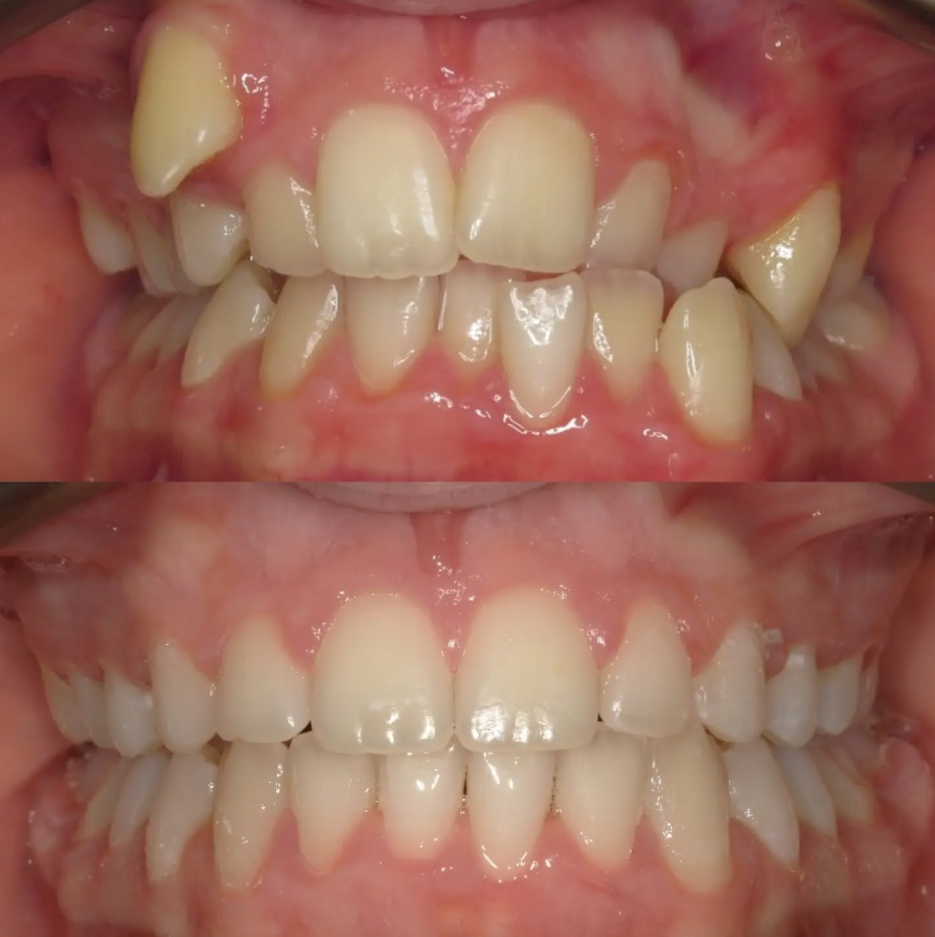
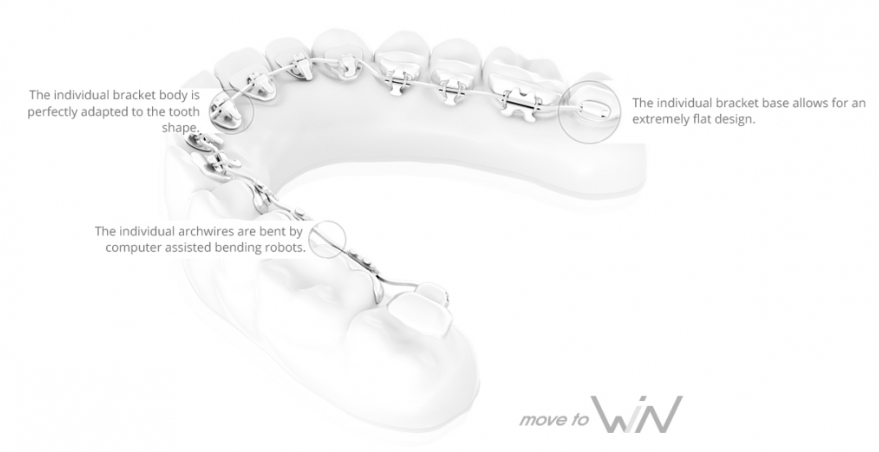
What is a bonded retainer?
A bonded retainer is a thin wire that is permanentlyattached to the back surface of the front teeth, most often from canine tocanine. It keeps the teeth in their corrected positions following orthodontictreatment. Because it remains fixed in place, it works continuously and doesnot rely on patient compliance.
Why does Aligned recommend bonded retainers?
After orthodontic treatment, teeth naturally tend to return to their previous positions over time, a process called relapse. Retainers prevent this from happening.
At Aligned, bonded retainers are recommended for certain patients because they:
Maintain alignment around the clock and slow tooth movement if removable retainer is lost
Are discreet and comfortable, hidden behind the teeth
Are reliable for areas that are more prone to movement, such as the lower front teeth
Why does Aligned not include bonded retainers for everyone?
While bonded retainers are an excellent way to hold tooth positions, they are not clinically necessary for every patient. At Aligned, we only place them when it is clinically indicated, meaning they are the best choice for a patient’s specific needs and dental health.
Here are some examples:
When tooth movement risk is high: Patients who have had significant crowding, often benefit from a bonded retainer to prevent those teeth from rotating or shifting again.
When growth or bite changes are expected: In growing patients or in complex bite corrections, a bonded retainer can hold critical tooth positions steady through further development.
However, for some patients, a removable retainer is the better choice. Examples include:
When hygiene is a concern: Bonded retainers require careful cleaning around the wire, and not every patient can maintain that level of care.
When there is minimal relapse risk: Patients with very stable tooth positions may not need to wear a fixed retainer permanently.
When dental anatomy limits bonding: If teeth are short or have enamel wear, bonding a wire may not be feasible or secure.
At Aligned, each retainer recommendation is made after athorough clinical assessment. Our goal is always to choose the type of retainerthat best supports your individual treatment and long-term oral health.
How should I keep a bonded retainer clean?
To maintain your bonded retainer and surrounding teeth:
Brush carefully along and behind the wire at least twice daily.
Use interdental brushes, or a water flosser to clean beneath the wire.
Attend regular dental visits so your general dentist can checkthat the wire remains plaque-free.
What should I do if my bonded retainer becomes loose or breaks?
If your bonded retainer feels loose, detached, or begins to cause irritation, contact Aligned promptly. It can often be repaired quickly to prevent unwanted tooth movement. Any repairs usually incur a charge.
How long is a bonded retainer needed?
Many patients wear their bonded retainer for as long as it remains comfortable, intact, and hygienic. It is a long-term safeguard for your smile, provided it is properly maintained.
Final thoughts
Bonded retainers are a valuable tool for maintaining the results of orthodontic treatment, but they are not necessary for everyone. At Aligned, we base every decision on clinical need and individual assessment.This ensures each patient receives the right type of long-term retention fortheir unique smile and lifestyle.