Twin Block vs Invisalign® with Mandibular Advancement
Both treatment options aim to correct bite issues by guiding the lower jaw forward. However, they differ significantly in appearance, comfort, and overall experience. If you’re trying to decide which option may bemost suitable, here’s a clear breakdown.
What Is a Twin Block?
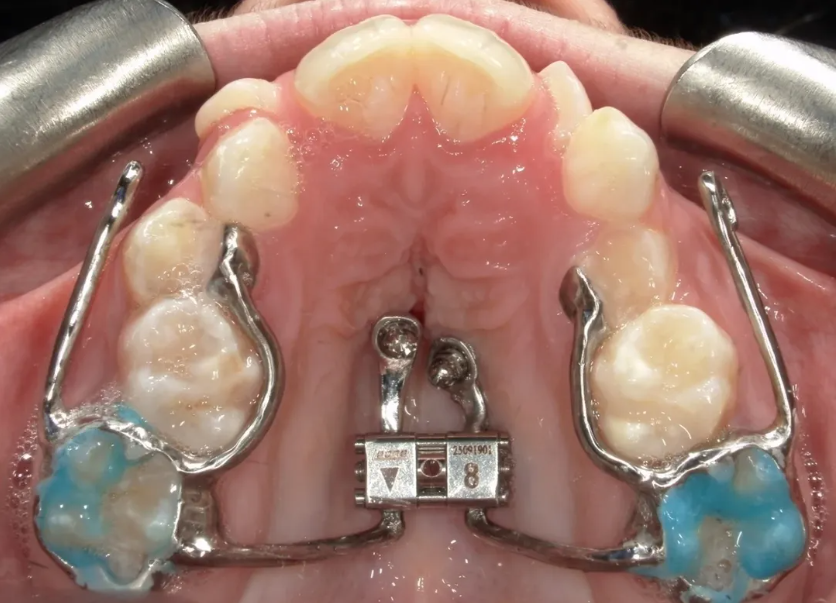
A twin block is a removable functional orthodontic appliance made up of two separate acrylic plates—one for the upper teeth and one for the lower teeth. These plates contain angled bite blocks that posture the lower jaw forward when worn.
This forward positioning helps encourage natural jaw growth and gradually improves the bite over time.
Pros:
- Effective for moderate to severe bite issues
- Often a more affordable orthodontic option
- Well-established treatment method
Cons
- Bulky and noticeable when worn
- Can temporarily affect speech
- May cause increased saliva production initially
- Requires high compliance (typically 20+ hours per day)
- Visible appliance may affect confidence
The initial phase of twin block treatment usually lasts around 6–9 months, provided the appliance is worn as instructed.
What Is Invisalign® with Mandibular Advancement?
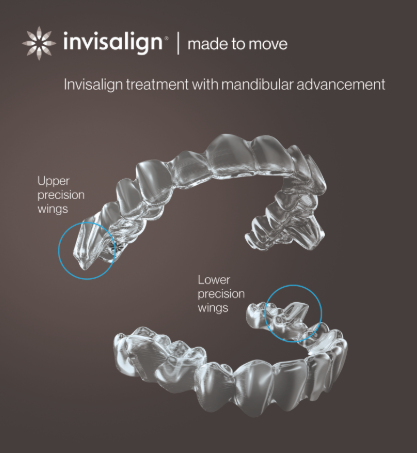
Invisalign® with mandibular advancement uses a series of clear aligners designed with built-in features such as precision wings that gently guide the lower jaw forward.
Unlike traditional functional appliances, Invisalign® allows tooth straightening and jaw correction to happen at the same time.
Pros:
- Virtually invisible and highly aesthetic
- More comfortable and less bulky than functional appliances
- Combines jaw correction and tooth alignment in one treatment phase
- Easier to integrate into daily life
Cons:
- Higher cost compared to traditional functional appliances
- Requires strong compliance (20–22 hours of wear per day)
- Treatment success depends on consistent use
Side-by-Side Comparison
Twin Block
- Noticeable and bulky
- Can affect speech initially
- Jaw correction first, then tooth alignment
- Removable appliance
- Lower cost option
- Compliance can be challenging for some patients
Invisalign® with Mandibular Advancement
- Nearly invisible
- Slim, comfortable design
- Jaw correction and tooth straightening happen simultaneously
- Removable aligners
- Higher cost option
- Often easier for motivated patients to wear consistently
So, Which Is Better?
There is no single “best” option for everyone.
A twin block may be recommended for patients with more significant jaw discrepancies, particularly during periods of active growth. Itis also often considered a more cost-effective option and may be available under NHS orthodontic treatment when eligibility criteria are met.
Invisalign® with mandibular advancement may be better suited for patients who prefer a more discreet and comfortable option and are confident in wearing aligners consistently as required.
Ultimately, the most suitable treatment depends on several factors, including:
- Age and stage of growth
- Severity of the bite issue
- Lifestyle and compliance
- Aesthetic preferences
An orthodontist will assess these factors and recommend the most appropriate treatment plan. However, parents also play an important role in understanding their child’s personality and which option may best suit their day-to-day routine and comfort level.
Final Thought
Both twin block appliances and Invisalign® with mandibular advancement can be effective in guiding lower jaw growth during development. The key difference lies in choosing the appliance that best fits the patient’s needs, lifestyle, and ability to wear it consistently.
Ultimately, the best results come from matching the right treatment to the right patient.

.jpg)