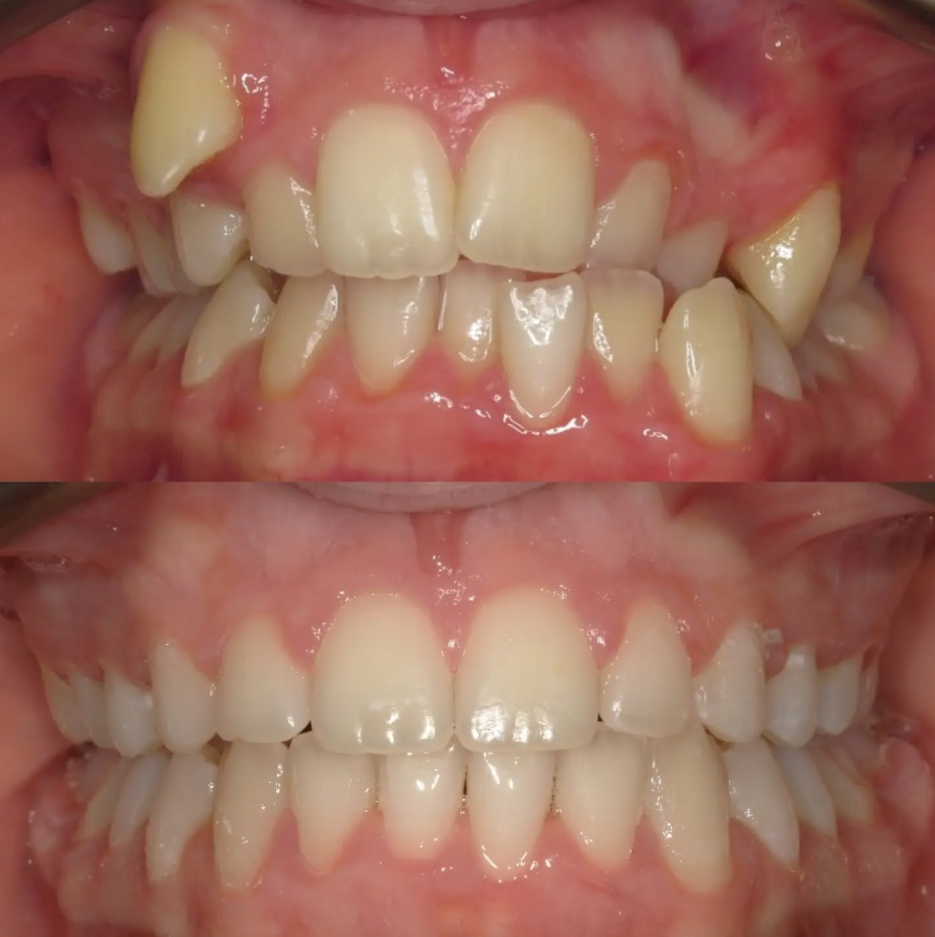
Many parents think of braces as a treatment for crooked teeth, but could orthodontic treatment actually do something much bigger? Could early treatment help guide a child’s jaw growth and potentially reduce the need for jaw surgery later in life?
The answer is: in some cases, yes.
Children’s jaws are still developing, and that growth window creates opportunities that simply do not exist in adulthood. Orthodontists can sometimes use braces and other orthodontic appliances to influence the way the teeth and jaws develop, helping create a healthier bite and more balanced facial growth.
How Can Braces Affect Jaw Growth?
Unlike adults, children still have growing bones. During these years, orthodontic treatment may do more than straighten teeth, it may help direct growth in a more favorable way.
Depending on the child’s needs, treatment can sometimes:
· Encourage proper upper and lower jaw relationships
· Create space for crowded teeth
· Correct bite problems early
· Reduce strain on teeth and jaw joints
· Support more balanced facial development
This process is often called growth guidance.
Does This Mean Braces Can Eliminate Jaw Surgery?
Not always.
Jaw surgery, also known as orthognathic surgery, is usually recommended when there are significant jaw size or positioning problems that cannot be corrected through orthodontics alone.
However, when certain bite or jaw issues are identified early, treatment during childhood may help reduce the severity of future problems. In some cases, this may decrease the likelihood that surgery will be needed later.
The key phrase is “in some cases.”
Every child develops differently, and factors such as genetics, growth patterns, and the severity of the jaw discrepancy all play a role.
Which Children May Benefit from Early Orthodontic Guidance?
Parents often wonder whether there are signs they should look for.
Some indicators can include:
· Severe crowding
· Crossbites
· Underbites
· Overbites
· Difficulty chewing
· Mouth breathing habits
· Early loss of baby teeth
· Noticeable jaw imbalance
An orthodontic evaluation can help determine whether these issues are likely to improve naturally or whether early intervention may be beneficial.
Why Timing Matters
Orthodontists often emphasize timing because growth does not last forever.
During childhood and early adolescence, the jaws are still changing. Once growth is complete, opportunities for guiding development become more limited, and treatment options may shift toward tooth movement alone, or in more severe situations, surgical correction.
This does not mean every child needs braces early. Many children benefit from waiting until the appropriate stage of development.
The goal is not simply to start treatment sooner; it is tostart at the right time.
The Bigger Picture
Braces are not just about creating straight teeth and better-looking smiles. For some children, early orthodontic treatment may help guide developing jaws in a way that supports healthier function and potentially reduces more invasive treatment needs later.
Can braces prevent jaw surgery?
Sometimes they can help reduce the chance, or lessen the severity of problems that might otherwise require surgery, but there is no universal guarantee.
What early treatment can provide is an opportunity: the chance to work with growth instead of waiting until growth has already finished.